SEASONS: PARASHAT BECHUKOTAI 2010

I delivered this sermon in May, 2010. It connects the Torah portion, Bechukotai, to the death of a well known individual that had occurred earlier that week. I am posting it this week as we prepare to read Parashat Bechukotai this coming Shabbat.

Those of us who are fortunate enough to engage in professions which involve an endeavor about which we are passionate, often have, in our imagination, another profession that reflects one of our other interests. I certainly do. In that parallel universe of our imagination, I am a baseball radio announcer. 

My station has only an audience of one (unless one of my kids or one of our animals comes into the room where I am watching a game) but that doesn’t matter. I can’t watch a game without broadcasting it. 

If you’re a baseball fan, especially if you remember baseball on the radio,  it’s hard to think of the great plays of baseball history without hearing the voice of the announcer who made the play come alive. When you think of Bobby Thompson’s home run, you hear Russ Hodges screaming: “The Giants win the Pennant.” When you see a  tape of Kirk Gibson’s home run in the 1988 World Series, you can always hear Vin Scully exclaiming: “She is gone!” or Jack Buck saying; “I can’t believe what I just saw”. L’havdeel, to make a separation, the great baseball calls are like the Trop of the Torah reading, the chanting which accompanies the text.

The trop makes the Torah come alive and becomes the sound which we associate with the text. Let me give one clear example. As the Torah introduces the character of Noah and seeks to separate him from his evil generation, the reader chants one word with the slow, dramatic and majestic note called Zakef Gadol: V’NOACH matza hayn, And NOAH found favor in the eyes of God. It is not enough to read that line. If you are a Torah reader or familiar with Torah cantillation, you have to hear the line in your head as you read it. 

We lost a great baseball announcer this week. I don’t have a personal nostalgic connection to Ernie Harwell but for those who do, his was the voice of their youth who brought the Detroit Tigers games to life with his own interpretive twist. Even those of us who don’t share that experience know that he was so very, very good at his craft. And, he was more than an announcer, he was the voice of a city, and a region, often struggling with adversity. He believed in Detroit and in Michigan and he went to bat for the city and the state time and time again. In every aspect of his life, he urged us not to live life like the batter who took a third strike, namely by “standing there like the house by the side of the road” but to embrace life to the fullest. He lived a full life before his death at age 92. 

Ernie Harwell’s voice will continue to echo as will his written words including this thought which will help elucidate a point from today’s Torah portion. Harwell wrote: “Baseball is continuity. Pitch to pitch. Inning to inning. Game to game. Series to series. Season to season.”

“Season to Season”. When I was a kid, there were really only two seasons: “baseball season” and “not baseball season”. And, in fact, it could be said about these seasons that “never the twain shall meet”. For until the first pitch was thrown on Opening Day, there was very little to talk about baseball-wise. Yes, there were baseball cards that came out in March and news of a stray trade or signing during the winter but, in general, from the end of the world series until that first cold day in April when they opened up the ball park for the first time, there wasn’t much in the way of baseball. What there was was anticipation. 

Now it’s different. Now, the MLB network shows classic and not so classic games in January, the Free Agent Market gets hot in December and exhibition games are shown throughout the end of February and March. Yes, there is now only one season. And while baseball fans like me might like it that way, we are definitely missing something. 

We are missing the recognition of the change of seasons. 

It was in that different world of 30 or 40 years ago that one Ernie Harwell tradition had great meaning. He would begin each season’s opening broadcast by reading a verse from Shir HaShirim, the Song of Songs: “For lo the winter has passed, the rains are gone and the sound of the turtle dove is heard in our land”. In Ernie Harwell’s context, it meant that the off season had passed and the new season begun. 

The winter rains are gone. It is not their season. It was time for baseball and summer at last.

Parshat Behukotai features an idea which is found again and again throughout the Torah.  The idea is that rain is a symbol of blessing from God. For an agricultural people, nothing else would be expected. But, the Torah always qualifies the promise of rain by saying that the blessing comes in the form of “rain in its season”. 

This makes perfect sense for Israel and any part of the world where the seasons are distinct much like the baseball world I grew up in. In Israel, there is  a rainy season and a dry season. A drought in the rainy season or rain in the dry season is a catastrophe and was always interpreted as a punishment from God for failure to observe the covenant. Thus, it was not enough to promise rain, the rain had to be promised “in its season” for it to be a blessing.

In Behukotai, we read: “v’natati gishmeychem b’itam”, I will give your rain in its season. But, as our people spread throughout the world into different types of climate, it became more difficult to interpret this phrase since it is meaningless to those where rain would fall throughout the year. How, might we understand the promise of “rain in its season” in our personal lives if each season brings rain?

Let me share with you one commentary on this phrase. The “rain in its season” was interpreted to mean, “I will bring rain when it is most convenient”. The commentary teaches that if you observe the commandments, it will only rain at a time when you are planning to be home anyway, namely, according to this teaching, on Friday night. Where else is a person but at home at the Shabbat table on Friday night? So, let it rain all it wants. That is, said this commentary, the meaning of rain in its season: rain when it will have the least negative impact.

I find this to be a charming and insightful commentary because of a subtlety that I find most meaningful. The commentary is not saying that God will make it rain so that you want to stay home on Friday night and while you’re at home you might as well have a nice Shabbat dinner. The world doesn’t work that way. The outside world doesn’t always make it easy for us to fulfill our obligations. We have to make the decision of how to observe time in the world and this verse says that once we have established such a routine, we will find less opposition from the outside world, in fact we’ll find somehow the world will make it easier for us to continue to observe.

Even this, of course, is not the reality. No matter how much we might value and hallow our routine, the world isn’t always sensitive to it and sometimes we face challenges and sometimes, inevitably, we find ourselves compromising. But, the principle still holds that we must establish our routines in a world which wants to see one day just like the other, in a world which is not divided so clearly into seasons. We must somehow carve out for ourselves meaning in such a world. 

This is one of the gifts that Judaism provides for us. Each day is not like the rest. There is anticipation, each week towards Shabbat, each year towards Rosh Hashana, counting the days of the Omer leading up to Shavuot. Our Jewish calendar has happy times and sad times, seasons with many holidays, seasons with no holidays. There is no attempt to make each day like the one before. Instead, we talk about the seasons as if they really mean something, even if meteorologically the differences aren’t as stark as they are in Israel.

Kohelet teachers: there is a time for everything under the sun: a time to be born and a time to die, a time to rejoice and a time to weep. Our lives aren’t divided as evenly as Kohelet suggests. But, it is refreshing to think about seasons as if they actually do exist. 

Our Jewish calendar and our observances allow us to recapture a sense of a year divided into seasons, something which in so many ways more than baseball, we have lost the desire to embrace. We adapt the weather to make our lives comfortable inside. We work through the summer as if to take a break would be to intrude on our professional lives.

We have to break out of this passion to blur the seasons. If in no other way than by sitting down at the Shabbat table each Friday evening, regardless of the weather, we are hearkening back to a time when everything had its place and we felt that each day and each time was distinctly different and each day held its own unique promise.   

Thus, we can put, our own personal commentary on the way the world works and become accustomed to seeing the playing fields of our lives through the voice that tells us that each day is unique.  
POPE FRANCIS z”l

A few months after Cardinal Jorge Mario Bergolio was introduced to the world as Pope Francis, I spoke about him during a sermon. I admitted that I had become fascinated with him as a religious leader and, in fact, was a big fan.

There were times over the years of his papacy when I was less impressed, feeling that he had not gone far enough to work for the changes he seemed to advocate within the church. Then there were rare occasions when I felt his words or actions were misguided (even taking into account our obvious differences in theology). But, as I look back on his years as Pope, I find myself still a big fan, still very respectful of a man who reflected what religious leaders should be.

As I wrote on my Facebook page on the day of his death: “His kindness and gentle way and his concern for and commitment to those who are often forgotten or disparaged in this world were evident always. In this way, he set an example for all who seek positions of leadership. He will be sorely missed in a world which needs more kindness and empathy.”

He was such a gentle man but in his gentle nature lied a strength which touched so many people in the world. His dedication to those in need, to those who felt excluded was exemplary. The many photos and videos of his love and respect for children demonstrates the kind of man he was. And, his attempts to move the Church forward in becoming inclusive and respectful of all resonated with millions of people throughout the world, including many non-Catholics.

It is not, of course, my place to comment on internal matters of the Catholic Church. But, I hope that the Church will choose a new Pope who will continue to stress the values that Pope Francis taught and reflect the values which were the cornerstone of his Papacy.

May his memory be for a blessing.

SO MUCH MORE THAN A FUN SEDER SONG

         One of the most beloved customs of the Seder is closing the evening by singing several songs which have become synonymous with the Seder. Chad Gadya, Adir Hu and, of course, Echad Mi Yodea, “Who knows One”?

         Found in Haggadot dating back to the 15th century and a staple in most contemporary haggadot, Echad Mi Yodea is a “counting song” enumerating from 1 to 13 aspects of Jewish tradition which correspond to those numbers. The song is not specifically related to Pesach but has found its way into the Seder as a way of keeping children entertained and interested in the rituals of the holiday.  

         The fact that Echad Mi Yodea is particularly directed at the children should cause us to re-think the song’s place in the Seder. The prospect of singing the song with a lively melody and with, at some Seder tables, humorous hand motions associated with each of the phrases, might be enough to maintain kids presence at the table throughout the lengthy Seder ritual. But, if you want the children to enjoy the song, perhaps it is more appropriate to sing it in the middle of the Seder. I might suggest singing it right after the meal to inject some energy into sleepy children and to ensure that those who can’t stay up until the end of the Seder will have had their chance to sing the fun song. You might even want to consider interrupting the flow of the Seder by splitting the song up and singing one “number” at a time throughout the evening.  

         But however you sing it, I am convinced that the song isn’t just fun. In fact, I have come to believe that Echad Mi Yodea is profoundly meaningful. 

         Let’s look at the 13 answers to the song’s questions: 

         Who knows one? I know one. One is our God of heaven and earth.

         2 … the Tablets of the Covenant at Sinai.

         3 … the Patriarchs: Abraham, Isaac and Jacob.

         4 … the Matriarchs: Sarah, Rebecca, Rachel and Leah.

         5 … the books of the Torah.

         6 … the sections of the Mishna (the first code of Rabbinic Law).

         7 … the days of the week leading to Shabbat

         8 … eight days until brit milah (ritual circumcision). 

         9 … the months of pregnancy.

         10 … the Ten Commandments.

         11 … the Stars in Joseph’s dream (identified with Joseph’s brothers, Jacob’s sons).

         12… the Tribes of Israel. (named for Jacob’s children and two grandchildren)

         13… the attributes of God (from Exodus chapter 34)

         Now, let’s divide the 13 into pairs (Even though 13 is an odd number, it still works as you will see.) Each of the pairs contain two aspects which are directly connected with each other.

         1-2 God is creator of heaven and earth and also is the giver of Torah at Sinai through the process of revelation.

         3-4 The Patriarchs and the Matriarchs

         5-6 The Mishna explains and expands the meaning of the laws in the Torah.

         7-8 Both Shabbat and Brit Milah are referred to in the Torah as an “ot”, a “sign” of the covenant.

         9-10 Both concern parenting. The 5th of the 10 commandments is: Honor Your Father and Mother.

         11-12 Both enumerate the descendants of Jacob. 

         13 doesn’t have a pair. It can, however, be paired with #1 as an expansion of the concept of God, leading us back to the beginning and transforming the song into a continuous, never-ending circle. 

         So, I see the song as intricately written to show how different elements of our faith are connected to each other. 

         But the significance doesn’t stop there. Seen together, the subjects of these pairs, comprise a brilliant summary of the foundations of our faith. In addition, each of these factors of Judaism is clearly reflected in the Seder. 

         1-2 (and 13) God…The Seder is an evening in which we sit comfortably, reclining in the presence of God with an awareness of the importance of that relationship, historically at the Exodus and in our lives today.

         3-4 The Patriarchs and Matriarchs: Personal Identification with our History…We sit at the Seder cognizant of the roles of mothers and fathers throughout the ages. We think of all the parents and teachers who have taught their children and students about the Exodus throughout the ages and, for many of us, we recall our own parents and grandparents who sat with us at Seder Tables and whose presence we still feel around the table today as we share our stories and family traditions. And, we during the Seder we focus on the verses from Deuteronomy beginning with the phrase: “My father was a wandering Aramean.”

         5-6 Torah and Mishna: Learning as a Priority. Our tradition values the wisdom of the ancient texts as we seek to make them meaningful in today’s world. The ancient tradition of basing the Maggid, the storytelling section of the Seder, on midrashim, textual commentaries, on the verses from Deuteronomy beginning with “My father was a wandering Aramean” teaches us that even in the midst of the most complex ritual of the year, we take significant time to study. Torah study is a ritual in and of itself.

         7-8 Shabbat and Brit Milah: Ritual… The observance of Shabbat and the rituals of circumcision, naming ceremonies, Jewish weddings and so many others form the roadmap of our lives as Jews. And no ritual is as complex and beloved as the Pesach seder. 

9-10 Parenthood and the 10 Commandments: Living an ethical life…The responsibility to teach our children and our students to embrace the ethics found not only in the 10 commandments but in all the commandments of the Torah and guidelines our tradition has taught over the centuries is a solemn obligation. At Pesach we consider the horrors of slavery and our commitment to care for the stranger and free the oppressed of all who suffer degradation or persecution. Our rituals and traditions are meaningless unless we are committed to these and so many other moral and ethical teachings as the basis of our lives.

11-12 The children and grandchildren of Jacob: Our People and the Land of Israel… We are reminded of the critical importance of connecting with our people wherever they are as we sit at our individual Seders knowing that Jews throughout the world are doing the same. We renew our commitment to work to free those who can not observe the Seder and commit ourselves to concern for the well-being of our people everywhere. And we are reminded once again that the promise of redemption is tied, physically or conceptually, to the importance of the land of Israel in our lives as Jews. 

So, the song enumerates the foundational aspects of our lives as Jews: God, History, Learning, Ritual, Ethics, Peoplehood.

This simple song reminds us of what brings us together on the Seder nights and I urge you to ask yourself this question: Each of these values are critical but which of these are most important to you as you sit at the Seder this year? They all are important and indispensable as we consider our connection with our people and our faith. But which one or two are paramount to you this year? Is this year’s answer the same as you might have answered last year?

Echad Mi Yodea is such a fun song. So, sing it with joy. But realize how significant it is to be sung on a night on which so much of what we believe and practice as Jews comes to light in just a few hours.

I wish you a meaningful and memorable holiday.

AS WE ENTER THIS SHABBAT…

We enter into this Shabbat with the horrible images seared into our hearts and minds.

Through all the many months of suffering in Israel and in Gaza, the return of the two young children, murdered in the most brutal fashion has raised our heartbreak to an even greater level.

The sight of crowds in Gaza celebrating the coffins of Kfir and Ariel Bibas in the most grotesque way reflects an evil depravity that should shock and disgust every human being in this world.

The final insult of substituting a corpse and not allowing these young boys to be accompanied home by their mother brings the depths to which the leaders of Hamas and their followers have descended.

It is reasonable and justified to ask serious questions about the war in Gaza and how it has been conducted as I myself have done. But, these questions can only be asked with the acknowledgement of the reality of the cruelty visited not only on these two little boys but on so many Israelis who were brutalized on October 7 and after.

May their memory, and the memory of their mother, Shiri, and all of those who died in captivity be for a blessing and, as this week’s Torah portion of Mishpatim commands us, may we continue the sacred search for peace and justice in a world which needs this message more than ever before.

MEETING THE HOUR

It’s a cloudy, icy day today here in Ann Arbor, Michigan. It’s a typical winter day, the likes of which we’ve seen frequently over the past few weeks.

But hope is on the horizon. 

Spring training starts next week. Baseball season is coming!

This week’s edition of my podcast, Wrestling and Dreaming: Engaging Discussions on Judaism features a d’var Torah based on this week’s Torah portion of Beshallach. The d’var Torah begins on the baseball diamond. You can hear the podcast at wrestlinganddreaming.podbean.com but, for those of you who prefer the written word, here is a summary of the piece entitled “Two Sticks”.

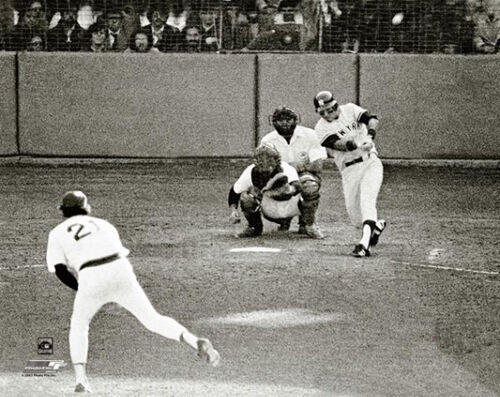
On October 2, 1978, my beloved Boston Red Sox played their arch-rivals New York Yankees in a one game playoff to determine the winner of the American League Eastern Division. The teams had ended the season tied for first place. 

The game was played at Fenway Park in Boston and the Red Sox were leading 2-0 in the top of the 7th inning. There were two outs and two on base for the Yankees when the Yankee shortstop Bucky Dent came up to bat. Dent was a light hitting shortstop and it’s fair to assume that most Yankee fans would have preferred to see one of their power hitters come to the plate in the most critical moment. 


But much to the eternal chagrin of Red Sox fans, Bucky Dent hit a 3 run homerun that put the Yankees ahead to stay in a game which ended with a 5-4 Yankee victory.

By virtue of his homerun, he earned a new middle name (at least according to Red Sox fans). He will forever be known as Bucky “bleeping” Dent. 


As much as I cried that day and refused to even mention that man’s name for many years, I have to say that I have begun to realize in Bucky Dent’s homerun, a reflection of a beautiful statement in Pirke Avot, Ethics of the Fathers, attributed to the rabbi Ben Azai. Ben Azai taught: “Do not denigrate any person for there is no person that does not have their hour.”

That was Bucky Dent’s hour and he surely took advantage of it.

In this week’s Torah portion, we read that Moses has led the people to the edge of the sea. The sea is in front of them, the Egyptian army is closing in. According to the Torah, God calls to Moses: “Mah Titzak Elay”. Why are you crying out to me?

There is no reference in the Torah to Moses’ cry to God and many rabbis taught that the cry, one apparently of desperation, was omitted in deference to Moses’ reputation as a great leader.

But, according to the Midrash, God says to Moses: “Why are you crying out in a lengthy plea to me? The hour waits only for you.” In other words, everything is ready for a miracle and the only thing lacking is you doing your job. God tells Moses to take his stick and hit the water. Moses does so and the water splits.

So, if according to Pirke Avot, each of us has our “hour”, the hour is wasted unless we realize it and play our role to the best of our abilities.

We all have our “hours”. We all experience times when we can play a critical role. Sometimes these are small roles, sometimes great roles. But, in each of our lives, there are moments when we can do what no one else can do. Perhaps we are the only person around to help someone. Perhaps we alone have a skill or a talent which is needed at that very moment. The only issue is: Will we take advantage of the hour to do our part to change the life of another person or of the entire world for the better?

While I do love baseball, obviously I would not put Bucky Dent’s homerun on the level of Moses’ splitting the sea. But the fact that both meet their hour with a stick of wood reminds us that in small ways in big ways, we can use our hour to “split the seas” in front of us and change the world. 

May we all recognize the power of our “hour” and may we be privileged to look back on our lives and identify those “hours” in which we met the challenge of the moment.

DISGRACE

I haven’t written anything about President Trump since he took office a week and a half ago. This despite the fact that I have been deeply concerned by some of his “executive orders”. I considered his statements during his inaugural address to be reprehensible in the way he strongly criticized previous administrations while former Presidents were in the room. I feel that many of his picks for cabinet positions are unqualified and I am deeply fearful of the way in which his administration has already demonized immigrants and transgender individuals among others.

Still, I wanted to take a break from all of the anger and bitterness I feel towards this man and try to focus on other things.

But his remarks today during his press conference concerning the horrible crash in Washington were an absolute disgrace and can not be allowed to stand without a response. This horrible disaster which took the lives of so many has plunged victims’ families and friends, and the entire nation into mourning. It is a time to reach out in comfort and solace. It is a time for public figures to rise to the occasion and unite our country at this time of deep sadness.

At a moment in which he assumed the role of “comforter in chief”, President Trump began with some clearly scripted remarks which, from my perspective did not display the empathy and concern that such statements require. That didn’t surprise me. He has shown himself unable to express such compassion over and over again.

But, then, shortly after those brief remarks, he turned the press conference into an opportunity to rant against the Biden and Obama administrations and to make it known that the cause of the crash was the government’s DEI programs which he so adamantly opposes. His accusations against air traffic controllers when the investigation into the crash has hardly begun was horrendous.

It was an absolute disgrace to see the President of the United States playing the “blame game” while bodies still are being recovered and then, to hear him state that he and he alone can solve the nation’s problems. Over and over again, he found people to blame while continuously patting himself on the back and complimenting himself for the way he addresses issues and the way in which he only chooses the most “intelligent” and “best” people to work in his administration.

It was a horrendous display of egotism, of insensitivity and callous behavior.

While I’ve come to expect this of him, this was beyond despicable.

This is the way this President responds to a crisis: with name calling, demonizing and divisive words and actions. It is not the way a president – or any human being for that matter- should act

There is nothing else to say. We must all raise our voices.

And may the families of the victims find peace and comfort in knowing that all in this nation stand with them in their pain.

HOPE

As I write this, I, along with millions of people throughout the world, am awaiting final confirmation of the ceasefire agreement which would result in the return of the Israeli hostages and an end to the fighting in Gaza. It is by no means a “done deal” and we must hold our collective breaths as the final details are worked out.

I have so many mixed emotions at this time.

I believe that the return of the hostages to Israel should have been a priority from the moments after the horrendous Hamas attacks of October 7. I also believe that Israel had an absolute obligation and responsibility to do as much damage as possible to Hamas to prevent future attacks.

While Israel has continuously claimed that the best solution to the hostage crisis was a military one and that it was not wise to reach a ceasefire agreement until Hamas was completely destroyed, each and every day the hostages have remained in Gaza must have been a nightmare. And, the horrible destruction in Gaza has caused such unimaginable suffering to innocent Palestinians who are also victims of decisions and priorities set by Hamas.

But, now we are here, on the verge of an agreement which would return the hostages- sadly, not all at once- and in exchange for Palestinian prisoners, many of whom have committed acts of terror in the past. One could argue that it is not a “good deal” for Israel but with an opportunity for the hostages to return and an end to the slaughter in Gaza, it is long since time that such an agreement be made.

I do have many concerns about the days to come. I would like to share one of them.

While Israelis, Jews and lovers of Israel throughout the world wish to celebrate the return of the hostages, I pray that their return, God willing, will be marked with quiet appreciation, private reunions and a recognition that while so many of us have been praying and working for their release, it is not the time for unbridled joy.

These individuals have been through hell. Their lives will never be the same. And, while so many of us will be so thankful that their capture will come to an end, families of those who come back alive will face so much difficulty in the days ahead. And we must keep in mind those families who will receive the remains of their family members and be sensitive to their mourning.

It is easy to say that this deal should have happened months ago. Perhaps it wasn’t the right time. Perhaps opportunities were missed because of the intransigence of one side or the other. But, what is important is that we are closer now to seeing the beginning of the end to this horror than anytime since October 7 and, God willing, so many who have suffered for so long may see at least better days ahead.

ANOTHER UNUSUAL EXPERIENCE

Over the years, I have posted many pieces on this website describing personal experiences- stories of events that have happened to me that I find fascinating or that taught me something meaningful.

A friend once remarked to me that I seem to have more of these types of experiences than anyone else he knew. I took that as a compliment, but I don’t think it is true. I believe that every person has unique and memorable everyday experiences but that some people embrace and pay more attention to these experiences, and I consider myself one of those people.

So, in that spirit, here is a story I have never written about before.

Today, December 9, is our 34th wedding anniversary. Two weeks after our wedding, Ellen and I left for a honeymoon trip to Arizona and New Mexico. We chose that destination because we wanted to stay in the United States but to travel someplace warm. 

We had a wonderful time in Tuscon, hiking among the cactus parks, seeing the beautiful landscape and enjoying the warm winter sun. Then we set off for the “Land of Enchantment”: New Mexico. 

Fortunately, we had checked out the weather forecast for Santa Fe at the last minute before we left Ann Arbor and discovered that Santa Fe’s high temperature during the days we would be there was going to be 15 degrees. So we were prepared for a return to winter.

It wasn’t warm but we found Santa Fe to be an enchanting, fascinating, romantic city and thoroughly enjoyed our days there. 

We also took time to venture out to the Native American pueblos, the villages in which ceremonial dances took place at Christmas time. These were fascinating combinations of the Native American rituals and Christian faith brought by missionaries centuries ago. 

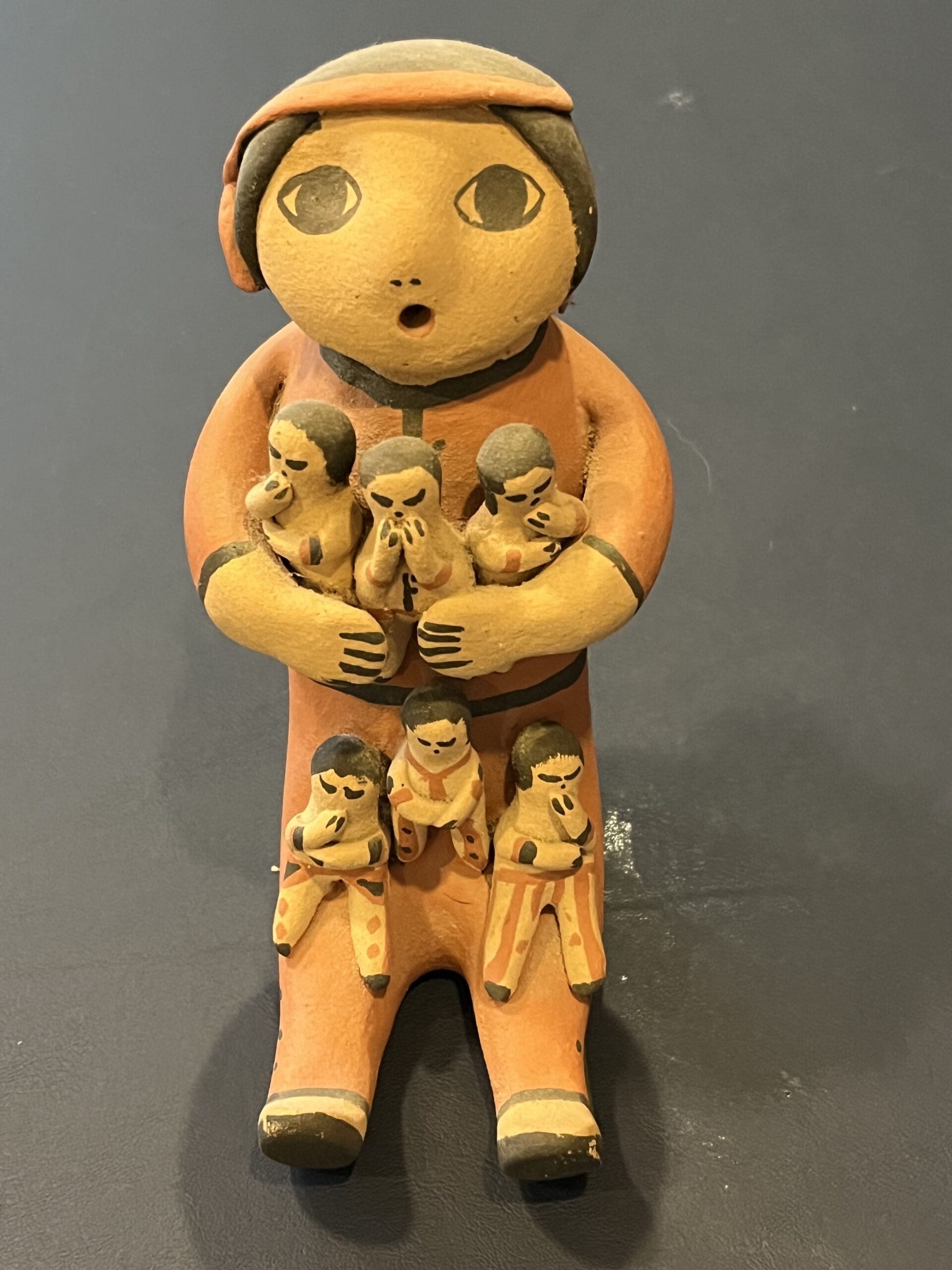
Along the way, we were also particularly impressed with the tradition of what are called storytelling dolls, pottery figures of a woman telling stories to young children and we wanted to buy one for our house.

We asked where we could purchase the best storytelling dolls and were told that we should go to a certain pueblo and find the woman at a certain address. This was one of the most respected artisans who made these dolls. 

So, we found the village and after asking around were directed to her door and she welcomed us into her home. We talked for a while and then we bought this doll which has always had a prominent place in our home.

But that is only the beginning of our story.

The artisan told us that during Christmas week, visitors to the pueblo are expected to visit the “shrine” and she asked her young son to direct us there. He agreed to escort us on his bicycle and led us to a home in the village and told us to go in. 

We were a bit hesitant, unsure of what would be expected of us and obviously wanted to avoid participating in any religious ritual, but we didn’t want to offend the residents by not engaging in the custom. So, we went in.

We entered and greeted the members of the family who were in the large living room area and were directed to two empty chairs. In one side of the room, near where the family was sitting, there was a very pretty nativity scene. The room was mostly silent.

The kitchen was off of the living room, and I noticed that there was a rather large pot of what appeared to be chili cooking on the stove with several women tending to the meal. One of the people in the kitchen brought a bowl of chili to one of the family members sitting near the shrine. We were offered some but politely refused, opting instead for the offered nuts and candy.

         We sat in silence for a few minutes and then a member of the community came over to us and asked us quietly where we were from and why we were visiting the village. We introduced ourselves and he was completely welcoming and then explained to us what we were seeing. He told us that every year one family is designated as the host of the shrine and for a week that family stays at home with the nativity scene while people in the community do their errands and cook for them. They are expected to remain in their home for the week as the honored hosts of the shrine. 

         Suddenly, I had the strangest feeling that I had seen all this before- not déjà vu but a sense of familiarity with what was happening. As it was time for us to go, we politely thanked everyone and left but I couldn’t wait to get outside.

         We got in the car and I just sat there for a moment and Ellen asked me what was wrong. I turned to her and told her that I could not believe what we had just seen. 

         Here was a family sitting at home for a week with a religious shrine while members of the community took care of their personal and religious needs. Here was a room full of people talking in hushed tones in deference to the family hosting the shrine.

         It suddenly had dawned on me that I had seen all this before: in a house of shiva.

         The stories of “conversos”, descendants of those who had been forced to convert to Christianity many centuries ago and settled in New Mexico are well known. Some retained some vestiges of Jewish customs, sometimes in secret, for generations. 

         Had we witnessed evidence of a long-forgotten connection with Jewish ritual by visiting the “Christmas shrine”? I am not sure. Perhaps it was a coincidence or my own projecting from my experience, but I only know what I felt. I felt we were, in some strange way, “at home” and I have never forgotten what that felt like. And each time I look at the storyteller doll, I think of how important it is for all of us to tell our stories.

The Election

I posted this on Facebook this morning. I may have more to write later but this is all I can write at this time:

“I used to have a country once. Where it’s gone I do not know.” Harry Chapin

I really did believe that the majority of Americans would look at the words and actions of Donald Trump including January 6, including his hate filled rallies and his obscene and crude remarks, including his convictions and say: “No.”

I was wrong. Whether they were ignoring those factors and focused on the economy or other issues or whether they endorsed his words and actions, it is clear that the majority of voters still have confidence in him as a leader.

I don’t understand it but it is the reality of where this nation is.

In addition to my fears about where this country will be headed in the next four years, and fears for so many vulnerable people, I hope we will still be able to impress upon our children and grandchildren that being good still matters. That job just got much more difficult but we have to keep trying.

DID I SEE THEM?

I discuss this idea in greater detail in my most recent podcast episode, entitled “Did I See It?”. You can hear the podcast at wrestlinganddreaming.podbean.com or other sources for podcasts. 

Last week, I fulfilled a long-time ambition. 

Or did I?

I was watching the news on Thursday evening when I heard that the Northern Lights would be visible all over Michigan. I was so excited as I have wanted to see the Lights for my entire life and never had been in the position to see them. 

This was my chance. 

So, I got into my car at 10 p.m. and drove to a road near my house where I knew I could see the northern sky. 

I pulled the car over. It was dark and somewhat desolate. 

I got out and looked up. 

I saw something: a streak or two of lighter color, not unlike a cloud, varying the appearance of the sky. 

There it was. But, was this the best I could hope for? I was disappointed. 

Then, I remembered what I had learned from others. You had to look through your cell phone camera to really see the lights.

So, I held my cell phone and took a picture. It immediately went to “night mode” and held the aperture open a few seconds. Then it clicked.

And I saw the most glorious sight: the brilliant colors of the Northern Lights filled the sky. 

Here is the picture. Enjoy it. But please continue reading after you admire the photo.

I was thrilled. I immediately texted the picture to my wife, Ellen, and was absolutely giddy. 

I then started to say the proper blessing for any astronomical phenomenon involving light: Blessed be God who performs the acts of creation.

But I suddenly stopped before I said the second word of the blessing.

I looked again at the sky without the aid of the camera and my joy was tempered quite a bit. There was still that grey streak and nothing more. 

And I began to think. Had I really seen the Northern Lights?

I know that those further north, perhaps those in a darker place, saw colors with the naked eye. But I had not. All that I had done was to take a picture and that picture, as beautiful as it was, was like dozens of others I have seen. I know the colors were actually there and that it was the limitations of my human eyes which prevented me from seeing them. But I had not seen them. My camera saw them. 

So, seeing the Northern Lights is still on that list of experiences I want to have in my life. I want to see them with my eyes, not the camera’s.

And this made me think about how many times we settle for indirect experiences rather than truly experiencing something wonderful for ourselves.

Sometimes that is inevitable. I will never fly into space, so I’m satisfied seeing pictures of the marvelous round ball of the earth. I will never skydive (I guarantee you) so I will have to marvel at the experience through someone’s hand-held camera as they fly through the sky. I can’t travel back in time to before I was born so I have to be satisfied seeing YouTube videos of the 1946 World Series (which the Red Sox lost by the way).

But there are so many other experiences which I am so grateful for having done.  

Seeing Saturn’s rings through a telescope (but with my eyes) was breathtaking in a way that a picture could never be. Hiking in the Sinai Desert and through Zion National Park were unforgettable and could never be matched by a video travelog. 

And, on another level, walking with or sitting and comforting dogs waiting for adoption at our local Humane Society I could be a part of their work means so much more than just the very important act of writing a check.  (We should do both for the causes we support.)

This difference between two types of experiences is critical in so many areas of life including one which I have been thinking about quite a bit for the last few years. 

I don’t at all denigrate those who by necessity attend synagogue services online while sitting at home. It is a great benefit of technology that this can be done and that those who are homebound, ill or far from home can participate in the familiar ritual. Having experienced it myself when weather prevented us from attending a family simcha, I am tremendously grateful for this advancement. 


But, for those who can attend in person, I can’t urge you enough to go beyond the experience which was so vital over COVID and come to shul. It is such a completely different experience when you are sitting in and with the congregation. It is the difference between actively experiencing something beautiful and meaningful as opposed to seeing it only through a picture. As beautiful as the picture can be, it can’t match experiencing it directly. 

This year, may we find more ways to do things with our own hands and see things with our own eyes.